OEM planning
Your OEM project checklist
Prepare the information that turns a product enquiry into a clear, comparable quotation.
ZM Tools buyer guide · 2026
Define the product and market
An OEM brief should make it easy to understand what you want to sell, who will buy it and what will be included. Begin with your country, sales channel, selected category or models, approximate quantity and launch target.
If you are still choosing models, describe the application and price position. A precise use case is more useful than a broad request for the biggest range.
Prepare the brand direction
Bring your logo, preferred colours and examples of the retail presentation you want to achieve. Confirm where the logo will appear: tool housing, battery, label, case, box or manual. Artwork dimensions and production requirements can be aligned after the model is selected.
- Brand name and product naming approach.
- Logo artwork and colour references.
- Label content and model identification.
- Manual languages and packaging text.
Write down the kit contents
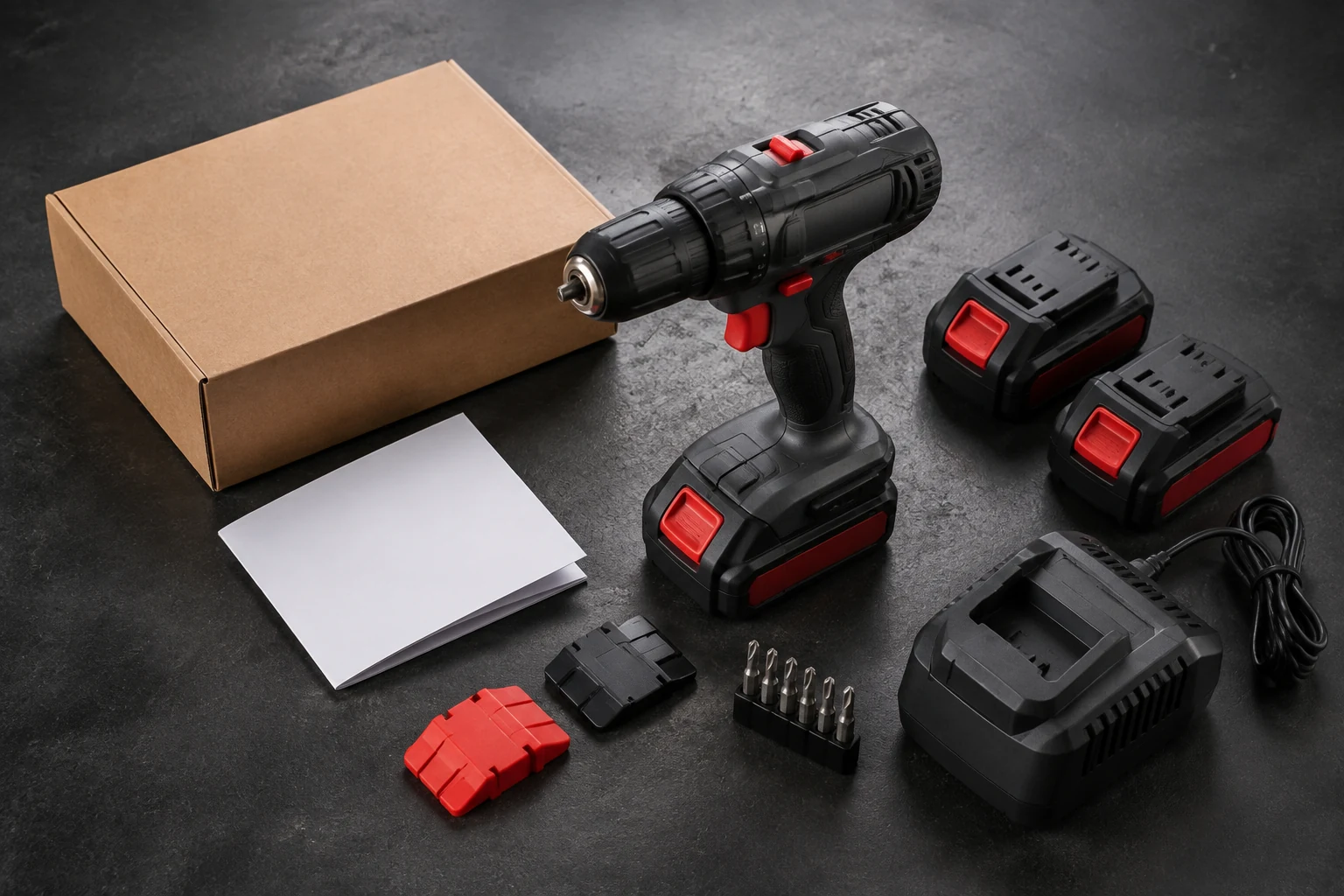
List every included item. Specify whether the offer is a bare tool, a single-battery kit, a multi-battery kit or a tool combination. Add the charger, case, bits, sockets, blades or other relevant accessories.
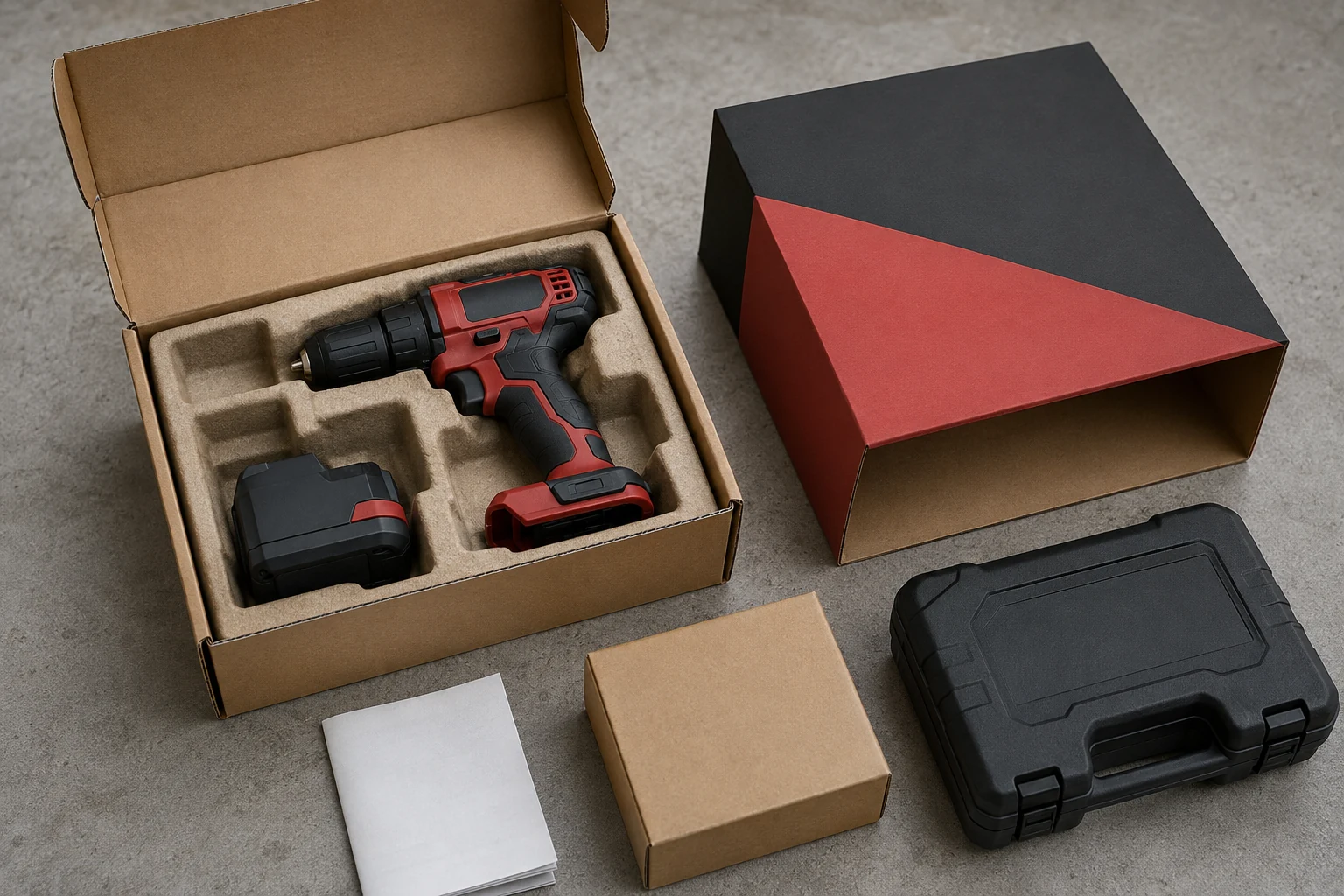
For packaging, describe the retail box, inner protection and master carton. Keep barcode artwork, carton marks and destination information with the approved packing specification.
Make the quotation comparable
Ask the quotation to state the exact model and configuration, quantity, sample arrangement, packaging, commercial terms and estimated timing. Identify any required document review before the order is finalized.
Do not apply one model’s MOQ or lead time to every product. Customization and component choices can change the commercial scope. Keep open questions in a short list and resolve them before sample approval.
Keep one approval record
Save the selected model, confirmed technical values, battery and charger, item list, artwork and packing proof together. If a detail changes, update the affected documents so the team is working from the same version.
This approved record becomes the starting point for the first order and later reorders. It helps the buyer explain exactly what needs to remain consistent.